
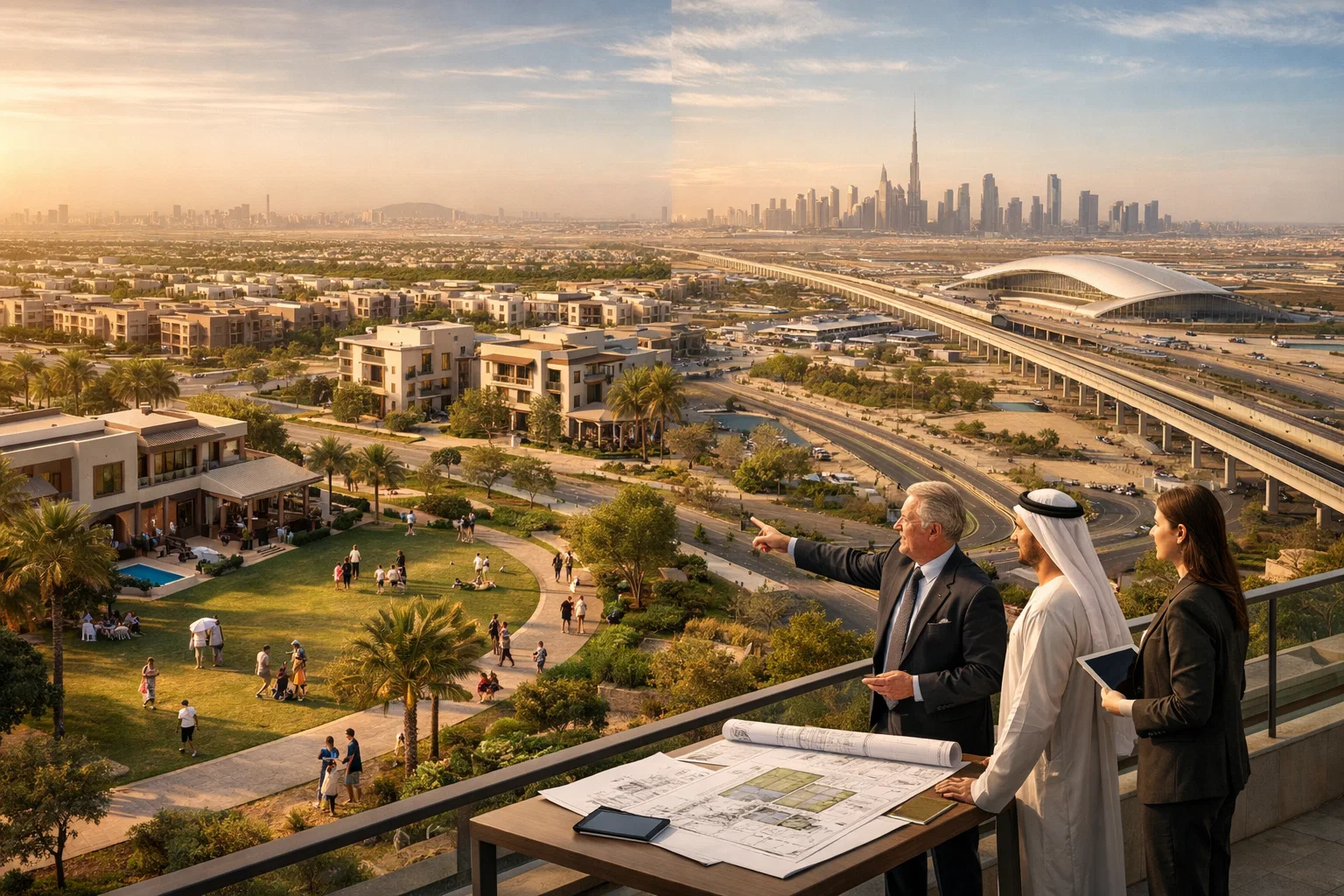

End-Users vs Investors in Dubai South: Who’s Buying, What They’re Choosing, and Why It Matters
As Dubai South transitions from a long-term vision into an active residential market, one thing has become clear:
two very different buyer profiles are entering the area — and they are buying for very different reasons.
Understanding this split is critical.
Markets that grow on one buyer type alone tend to be volatile.
Markets supported by both end-users and investors tend to build depth, stability, and long-term value.
Dubai South is increasingly showing signs of the second.
1. Two Buyer Profiles, Two Objectives
Dubai South is not attracting a single “average buyer.”
It is attracting two distinct audiences with different motivations, timelines, and risk tolerances.
Misreading this dynamic often leads to buying the right property for the wrong reason.
2. End-Users: Buying for Long-Term Living
End-users entering Dubai South are not chasing appreciation charts.
They are prioritizing livability, affordability, and future readiness.
Key characteristics of end-user demand:
- Preference for space, privacy, and community planning
- Willingness to buy earlier in a location’s growth cycle
- Longer holding periods with less sensitivity to short-term price movement
What attracts them to Dubai South:
- Newer master-planned residential zones
- Lower density compared to central Dubai
- Better value relative to established communities
- Alignment with future infrastructure and employment hubs
End-users tend to stabilise markets.
They rent less, sell less frequently, and absorb supply more steadily.
3 Investors: Buying for Positioning and Optionality
Investor interest in Dubai South is more calculated.
Rather than chasing peak rental yields, investors are focusing on:
- Entry pricing with upside potential
- Long-term demand visibility
- Exit optionality as the area matures
Key characteristics of investor demand:
- Preference for off-plan or early-cycle launches
- Sensitivity to pricing, payment plans, and holding costs
- Focus on resale depth rather than short-term speculation
For investors, Dubai South represents early positioning, not instant performance.
4. Where Their Choices Overlap
The strongest signal in Dubai South is where end-user and investor preferences intersect.
Both groups are increasingly drawn to:
- Master-planned communities rather than standalone buildings
- Practical layouts designed for real occupancy
- Developments positioned for future livability, not short-term hype
Projects that appeal to both audiences tend to:
- Lease faster after handover
- Experience less price volatility
- Maintain stronger resale demand over time
This overlap is a key indicator of sustainable growth.
5. Why This Buyer Mix Reduces Risk
Markets driven primarily by investors can rise quickly — and correct sharply.
Markets supported by end-users build value more slowly — but more reliably.
Dubai South’s evolving buyer mix suggests:
- Lower speculative pressure
- More organic absorption of new supply
- Greater resilience during slower cycles
This doesn’t eliminate risk — but it changes the risk profile.
6. What Buyers Should Ask Before Entering the Market
Whether buying as an end-user or investor, the same strategic questions apply:
- Who is the likely buyer or tenant after me?
- Is this product designed for real occupancy or just launch appeal?
- Does the area support long-term living, not just future promises?
If those answers are unclear, the purchase becomes a gamble rather than a strategy.
What This Means for Dubai South’s Next Phase
Dubai South is no longer a one-dimensional market.
The presence of:
- Long-term end-users
- Early-cycle investors
- Prime off-plan residential launches
Suggests the area is entering a structural growth phase, not a speculative one.
Markets evolve when different buyer types coexist — not when one dominates.
Final Thought
Dubai South’s momentum is not driven by a single project or announcement.
It is driven by who is buying, why they are buying, and how long they plan to stay.
For buyers in 2026 and beyond, understanding this buyer mix is more important than trying to predict prices.
Because sustainable growth doesn’t come from noise.
It comes from alignment.