
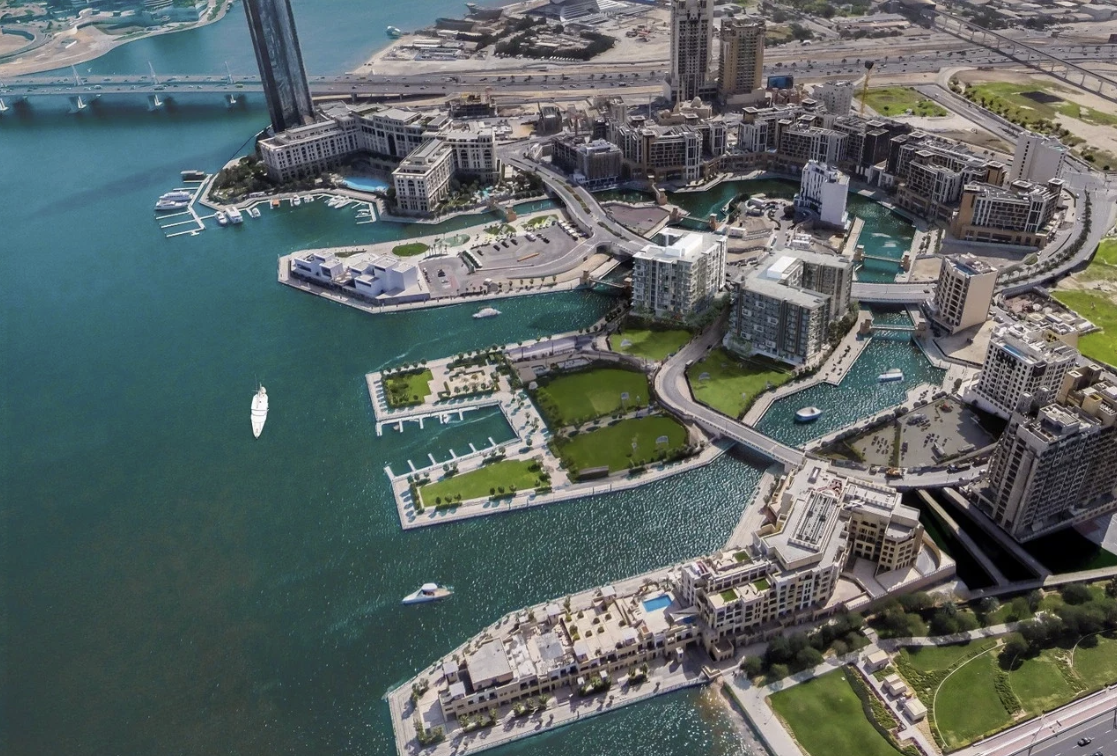

New Dubai Masterplan Unveiled: Al Jaddaf Gets Huge Creekside District
A new master planned district in Al Jaddaf signals where Dubai is heading next — toward transit-led, walkable communities built around long-term connectivity and urban living.
Masterplans are not just about buildings.
They are about where the city is going next.
And in Dubai, growth is no longer random.
It is becoming intentional, connected, and infrastructure-led.
Key signals:
- Development is shifting toward full urban districts
- Transport is shaping where value will emerge
- Mixed-use living is becoming the new standard
This is not just expansion.
This is urban evolution.
A New District Is Taking Shape in Al Jaddaf
A major one-million-square-foot mixed-use development is being planned in Al Jaddaf by Al Ghurair.
This is not a single project.
It is a district-scale masterplan combining:
- Residential
- Office space
- Hospitality
- Retail
- Cultural and public spaces
Designed as a walkable, integrated neighbourhood.
This is city-building — not just development.
Location Is the Real Story
What makes this project stand out is not just size.
It is positioning.
The district sits:
- Beside Dubai Creek Harbour
- Near the future Etihad Rail station
- Connected to Creek Metro
This places it at the intersection of:
- Waterfront living
- Mass transit infrastructure
- Future mobility networks
In Dubai, connectivity is value.
And this location is being built around it.
Dubai Is Moving Toward Transit-Led Growth
This project reflects a larger shift.
Dubai is evolving from:
- Car-led expansion
To:
- Transit-oriented communities
What that means:
- Reduced reliance on cars
- Increased walkability
- Better integration between living, working, and leisure
The idea of a “five-minute city” is central:
- Daily essentials within walking distance
- Public spaces integrated into daily life
This is how global cities are designed.
Dubai is aligning with that model.
Designed for Long-Term Urban Value
The masterplan is being developed by global architecture firm Pelli Clarke & Partners — known for landmark projects like the Petronas Towers.
The focus is clear:
- Public spaces
- Pedestrian movement
- Continuous activity throughout the day
Not isolated towers.
But a connected urban environment.
This creates longevity — not just short-term appeal.
Why This Matters for the Market
This project is part of a bigger pattern.
Dubai is:
- Expanding along infrastructure corridors
- Prioritizing connected districts
- Building around future transport networks
What this means:
- Areas linked to metro and rail gain long-term value
- Early-stage districts offer positioning opportunities
- Demand will follow connectivity
Real estate doesn’t just follow demand.
It follows infrastructure.
A Shift From Projects to Districts
Developers are no longer just building towers.
They are building:
- Entire communities
- Integrated environments
- Self-sustaining neighbourhoods
This marks a shift from:
- Product-based development
To:
- Ecosystem-based development
And ecosystems hold value longer.
What This Means for Investors
This type of development changes how opportunity is identified.
Key considerations:
- Proximity to future infrastructure
- Masterplan scale vs standalone projects
- Long-term livability, not just short-term returns
Early positioning in such districts often:
- Comes before full price discovery
- Benefits from infrastructure completion
- Gains from area-wide appreciation
The opportunity is not just in what is built —
but where it is being built.
Conclusion: Dubai Is Building Its Next Phase
This Al Jaddaf masterplan is not an isolated announcement.
It reflects how Dubai is planning its next phase of growth:
- Connected
- Walkable
- Infrastructure-driven
And in markets like this:
- Value is created before completion
- Demand follows connectivity
- The best opportunities sit in emerging districts
Because when a city builds around the future,
the real advantage is seeing where that future is forming.