
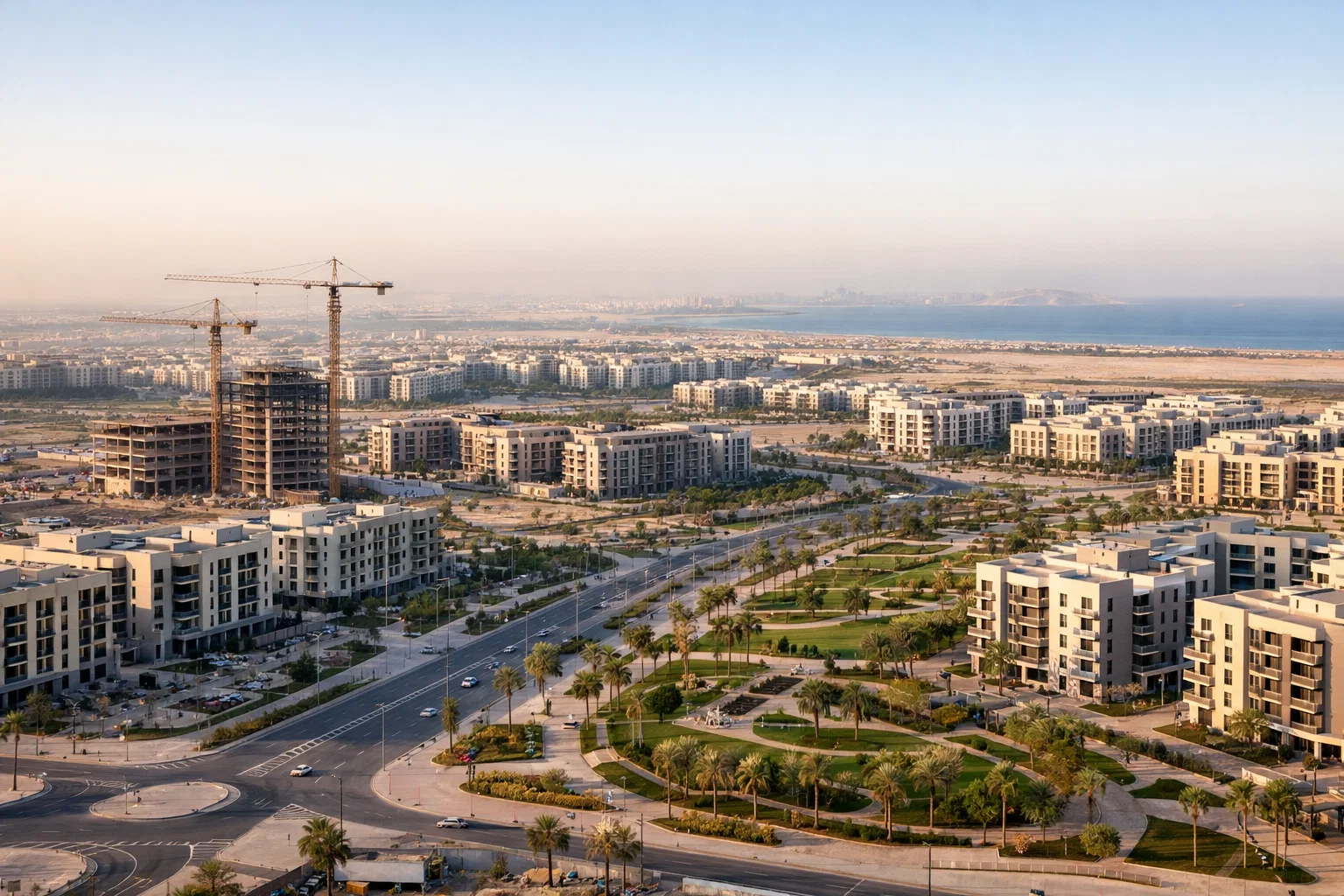

Prime Off-Plan in Dubai South: Why Projects Like Lunaya & Palm Springs Are Launching Here
Off-plan success in Dubai has never been about timing the launch.
It’s been about understanding why developers choose a location before buyers do.
In 2026, a noticeable shift is taking place:
Prime off-plan residential projects are increasingly launching in Dubai South and the Palm Jebel Ali corridor.
This is not accidental — and it’s not speculative.
Projects such as Lunaya and Palm Springs reflect a broader change in how developers are positioning their next phase of residential supply.
1. Off-Plan Doesn’t Work Everywhere — Even in Dubai
Dubai has matured past the stage where any off-plan launch succeeds.
Today, successful off-plan projects require:
- Clear long-term residential demand
- Infrastructure visibility, not just plans
- Pricing headroom for future absorption
- End-user suitability, not just investor appeal
This is why prime off-plan activity has shifted away from fully priced central zones and toward strategically early locations.
Dubai South fits that profile.
2. Why Developers Are Launching Prime Off-Plan Here Now
Developers typically launch off-plan in areas that offer:
- Long-term pricing runway
- Lower land acquisition pressure
- Alignment with future population growth
- Space to deliver master-planned communities, not isolated buildings
Dubai South provides all four.
As central locations become saturated and price-sensitive, the ability to deliver larger, lifestyle-oriented residential projects becomes limited.
Dubai South, by contrast, allows developers to design communities with:
- Better layouts
- Lower density
- Long-term livability in mind
This is exactly where off-plan performs best.
3. What Makes Projects Like Lunaya & Palm Springs Different
Not all off-plan projects are created equal.
The newer wave of launches in Dubai South shares a few common characteristics:
- Focus on end-user readiness, not just launch hype
- Community-led planning rather than single-tower delivery
- Practical layouts designed for real occupancy
- Pricing positioned for early-stage entry, not peak-cycle margins
These projects are not positioned as ultra-luxury.
They are positioned as future-prime residential — the segment that historically performs most consistently.
4. End-Users Are Quietly Becoming the Anchor
One of the biggest changes in off-plan dynamics is the growing role of end-users.
End-users now:
- Buy earlier in the development cycle
- Stay longer
- Reduce resale pressure during handover phases
Projects that attract end-users alongside investors tend to:
- Lease faster post-handover
- Experience less price volatility
- Hold value better in slower cycles
Dubai South’s newer residential launches are increasingly designed with this dual audience in mind.
5. Pricing Logic: Why Entry Matters More Than Handover Prices
The strongest off-plan outcomes rarely come from buying at handover.
They come from entering when pricing reflects future uncertainty, not future certainty.
Dubai South currently offers:
- Entry prices that account for development risk
- Time for infrastructure and perception to mature
- A long runway before the area becomes fully priced
This does not guarantee returns — but it improves the risk-reward balance, which is the real objective of off-plan investing.
6. What This Means for Buyers in 2026
For buyers evaluating off-plan in 2026, the lesson is simple:
- Prime off-plan opportunities don’t appear once an area is obvious
- They appear when fundamentals are aligning, but sentiment hasn’t caught up
Dubai South, supported by Palm Jebel Ali and large-scale planning, sits at that stage.
Projects like Lunaya and Palm Springs are not bets on hype.
They are positioning plays — aligned with how Dubai expands, not how it markets.
Final Thought
Off-plan success is not about choosing the “best project.”
It’s about choosing the right location, at the right stage, with the right expectations.
Dubai South’s emergence as a hub for prime off-plan residential is not a trend — it’s a signal.
For buyers focused on the next cycle, understanding that signal early matters more than chasing launches late.