
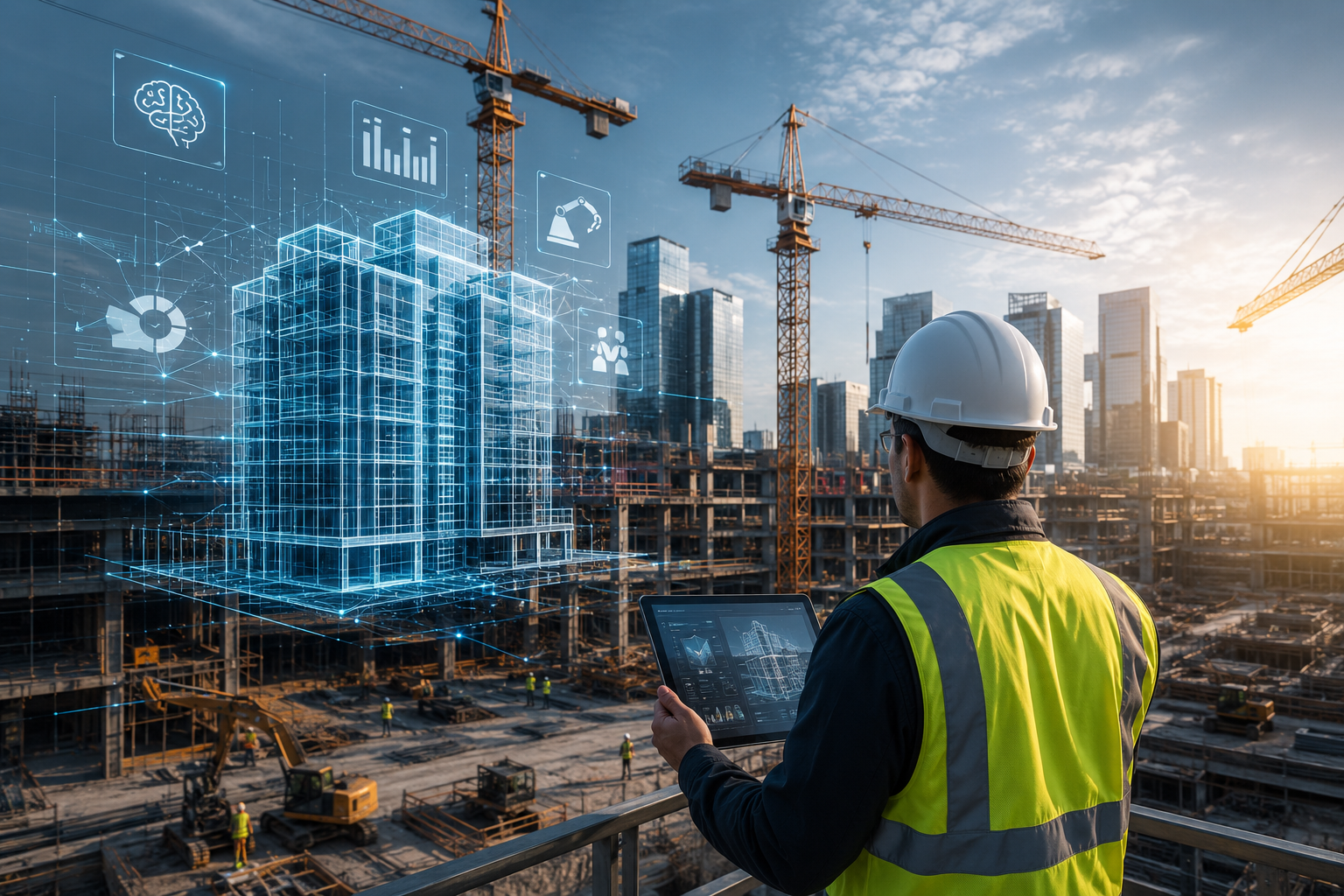

AI in Construction: 10 Ways Artificial Intelligence Is Changing the Way We Build
Artificial intelligence is no longer a future concept in construction. It’s already helping architects design smarter buildings, improving site safety, predicting delays, and reducing costs. Here are ten practical ways AI is transforming the construction industry, and the companies making it possible.
1. AI Designs Hundreds of Building Options in Minutes
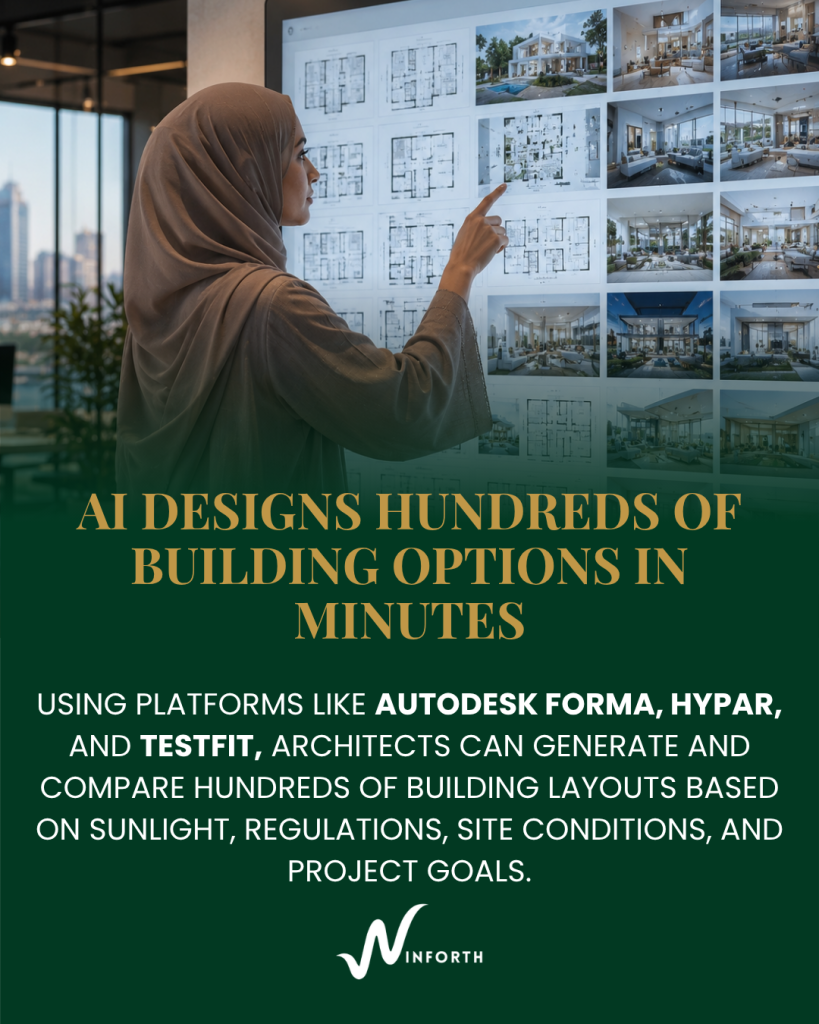
The design phase has traditionally been one of the most time-consuming parts of a construction project. Architects often evaluate multiple layouts before selecting the best option, balancing functionality, aesthetics, regulations, and cost.
Today, platforms such as Autodesk Forma (formerly Spacemaker), Hypar, and TestFit use generative AI to produce hundreds of design options within minutes. Architects simply enter the project requirements, and the software automatically explores different layouts while considering zoning rules, daylight, density, circulation, and sustainability.
Rather than replacing architects, these platforms provide better options faster, allowing design teams to focus on creativity and decision-making instead of repetitive modelling.
Why it matters
- Faster concept development
- Better use of space
- Lower design costs
- Improved sustainability
2. AI Detects Design Mistakes Before Construction Begins
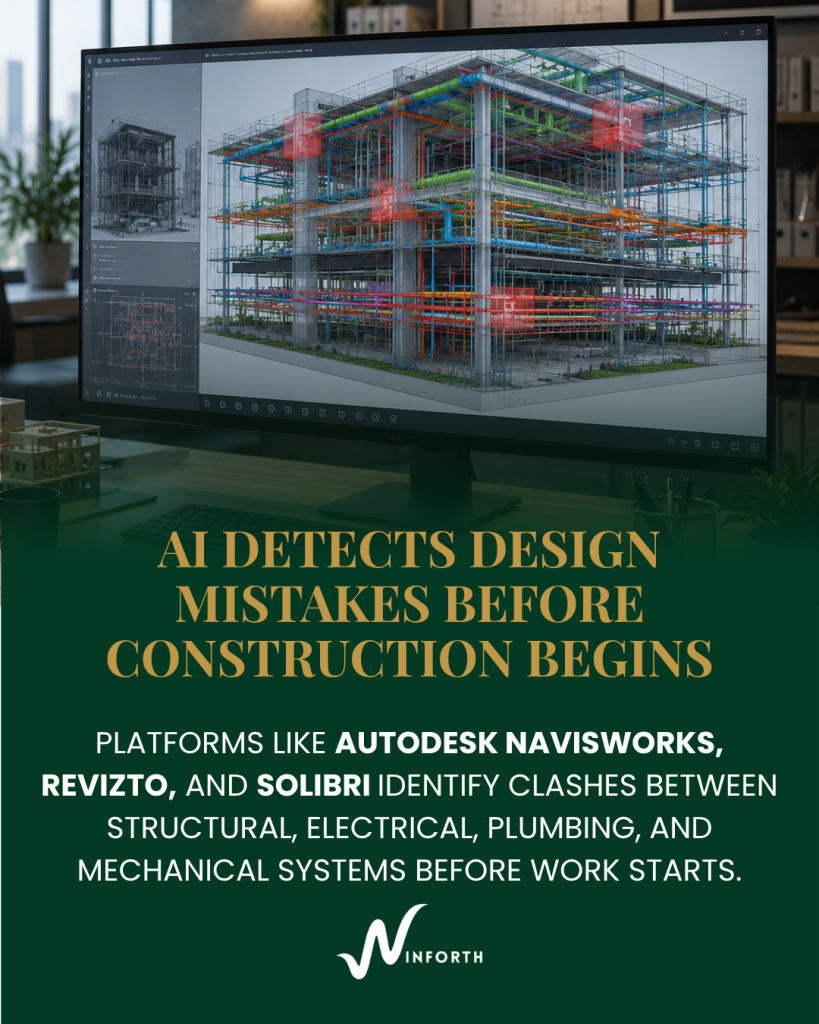
One of the most expensive problems in construction is discovering design conflicts after work has already begun.
Platforms including Autodesk Navisworks, Revizto, and Solibri analyse BIM models to detect clashes automatically. Instead of manually reviewing thousands of building elements, the software highlights where pipes, ducts, beams, or electrical systems interfere with one another before construction begins.
Fixing these issues digitally is significantly faster and less expensive than resolving them on site.
Why it matters
- Fewer construction errors
- Better coordination
- Lower rework costs
- Faster approvals
3. AI Predicts Delays Before They Happen
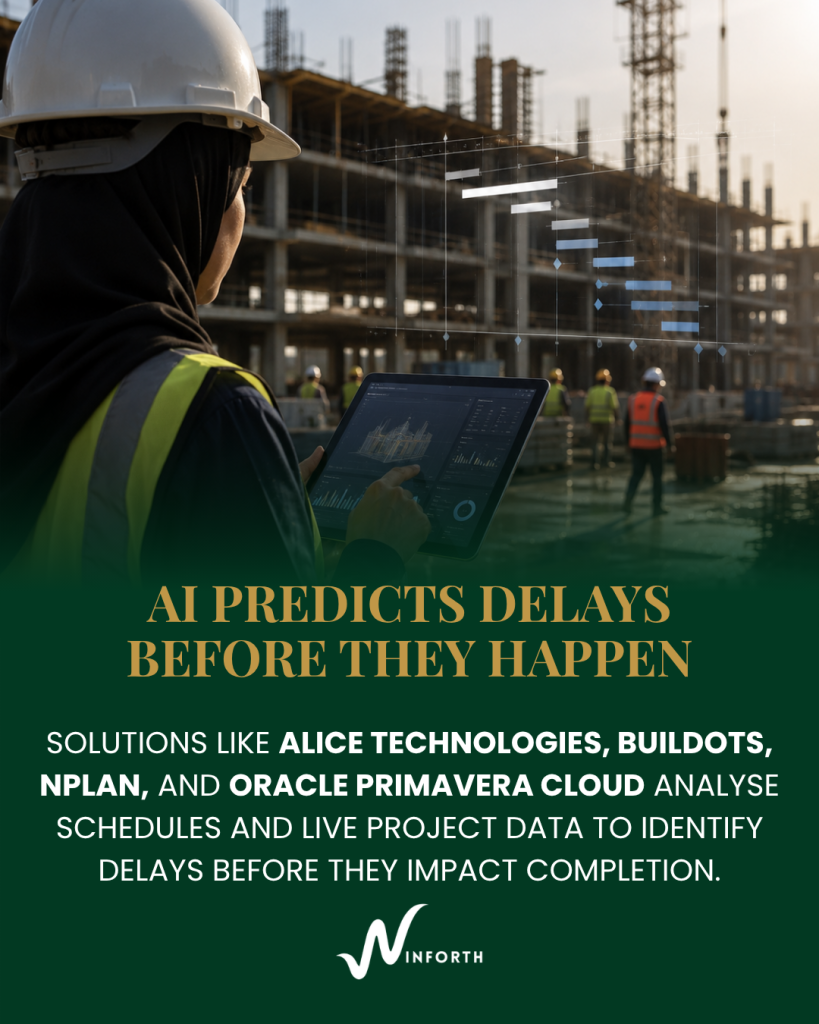
Construction schedules change constantly because of weather, labour shortages, equipment failures, and delayed deliveries.
Platforms such as ALICE Technologies, Buildots, nPlan, and Oracle Primavera Cloud analyse project schedules together with live construction data to identify risks before they become delays. Some systems even recommend better sequencing and resource allocation to keep projects on schedule.
Project managers receive early warnings, giving them more time to act before problems escalate.
Why it matters
- Smarter scheduling
- Better resource planning
- Reduced downtime
- Improved project delivery
4. AI Watches Construction Sites 24/7
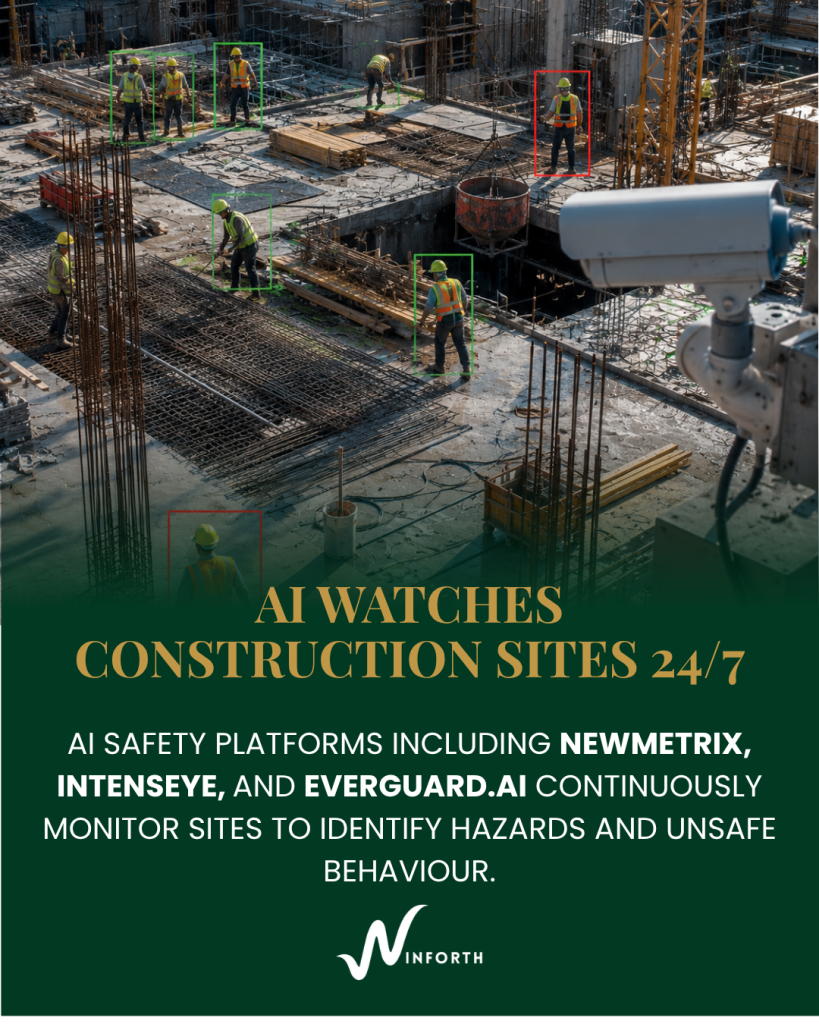
Traditional site safety depends on supervisors carrying out regular inspections.
Today, platforms like Newmetrix (formerly Smartvid.io), Intenseye, and Everguard.ai use computer vision to analyze live camera feeds, detecting missing PPE, workers entering restricted areas, unsafe equipment operation, and other hazards in real time.
This allows supervisors to respond immediately rather than waiting for scheduled inspections.
Why it matters
- Improved worker safety
- Faster hazard detection
- Better compliance
- Reduced accidents
5. AI Makes Cost Estimates More Accurate
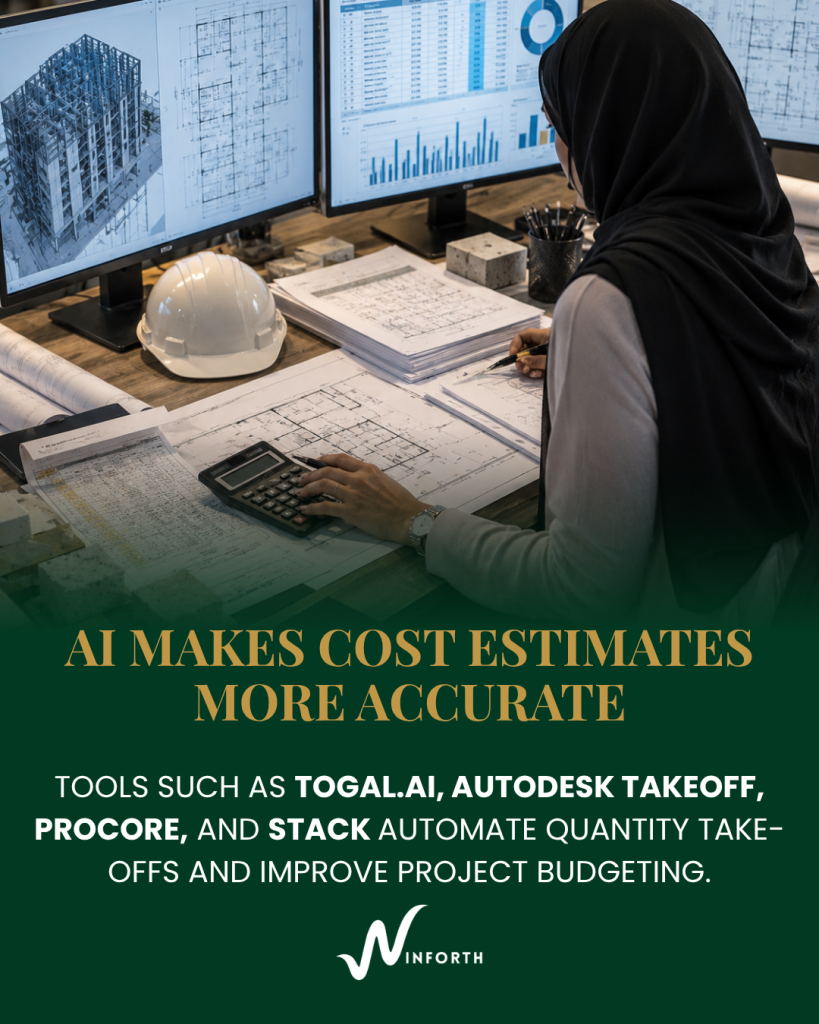
Estimating construction costs has always involved uncertainty.
Platforms including Togal.AI, Autodesk Takeoff, Procore, and STACK analyse drawings, quantities, historical projects, labour rates, and material costs to generate faster and more accurate estimates.
This helps contractors prepare competitive bids while reducing costly estimating errors.
Why it matters
- Better budgeting
- Fewer cost overruns
- Improved forecasting
- Stronger financial planning
6. AI Uses Drones to Track Construction Progress
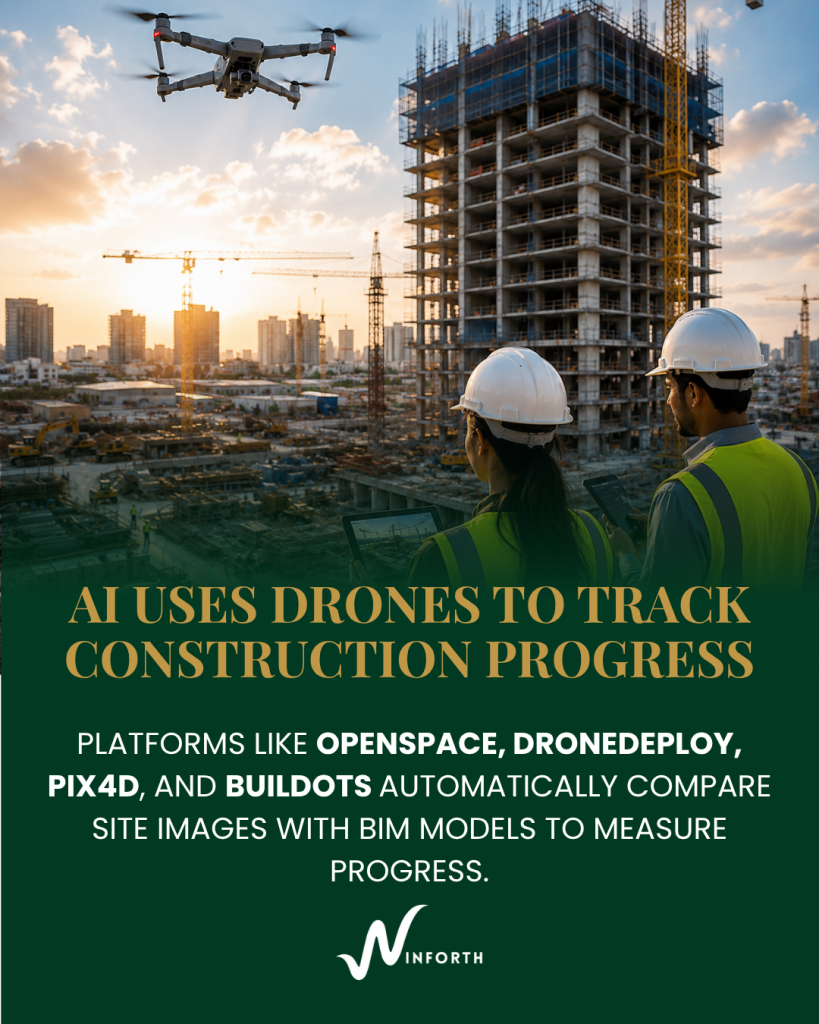
Drones have become one of construction’s most valuable technologies.
Platforms such as OpenSpace, DroneDeploy, Pix4D, and Buildots combine drone imagery and AI to compare actual site conditions against BIM models, identify quality issues, measure completed work, and generate progress reports automatically.
This provides project managers with real-time visibility without requiring constant manual inspections.
Why it matters
- Faster inspections
- Real-time progress tracking
- Better quality control
- Improved project visibility
7. Government Contractors Keep More Cash Available
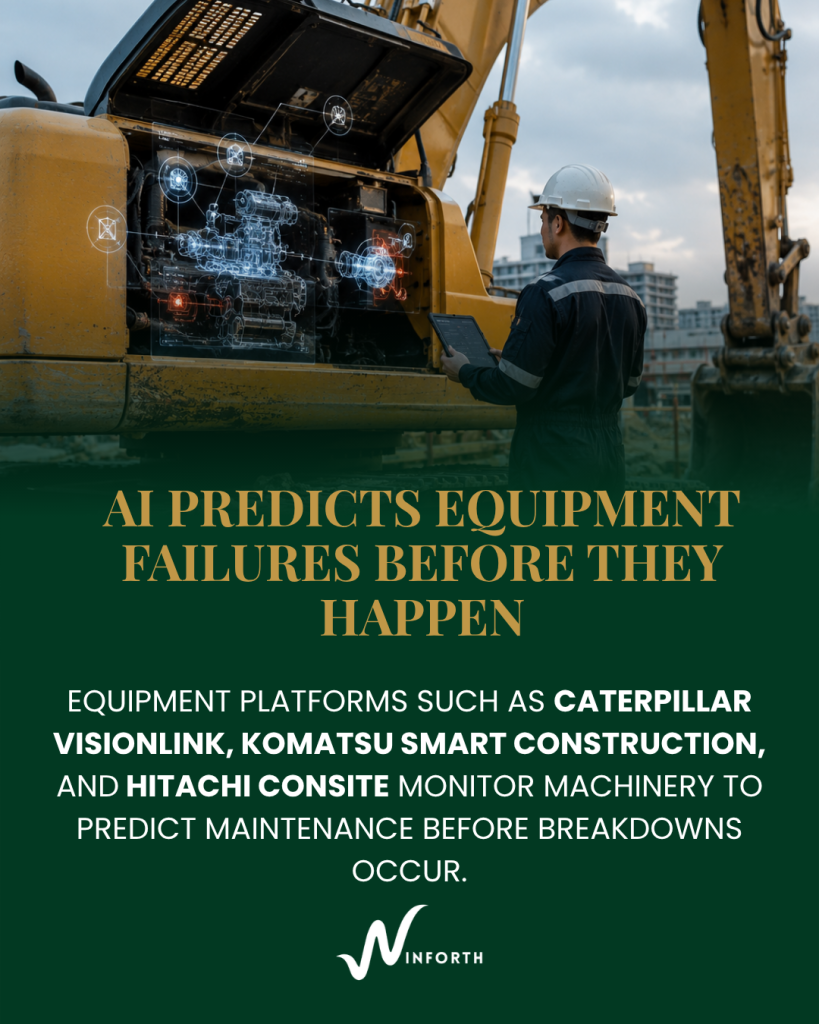
Unexpected equipment failures can delay an entire construction project.
Solutions like Caterpillar VisionLink, Komatsu Smart Construction, and Hitachi ConSite analyse sensor data from heavy equipment to detect unusual operating patterns and predict maintenance requirements before failures occur.
This improves equipment reliability while reducing downtime and repair costs.
Why it matters
- Less downtime
- Lower repair costs
- Longer equipment lifespan
- Improved productivity
8. AI Helps Reduce Construction Waste
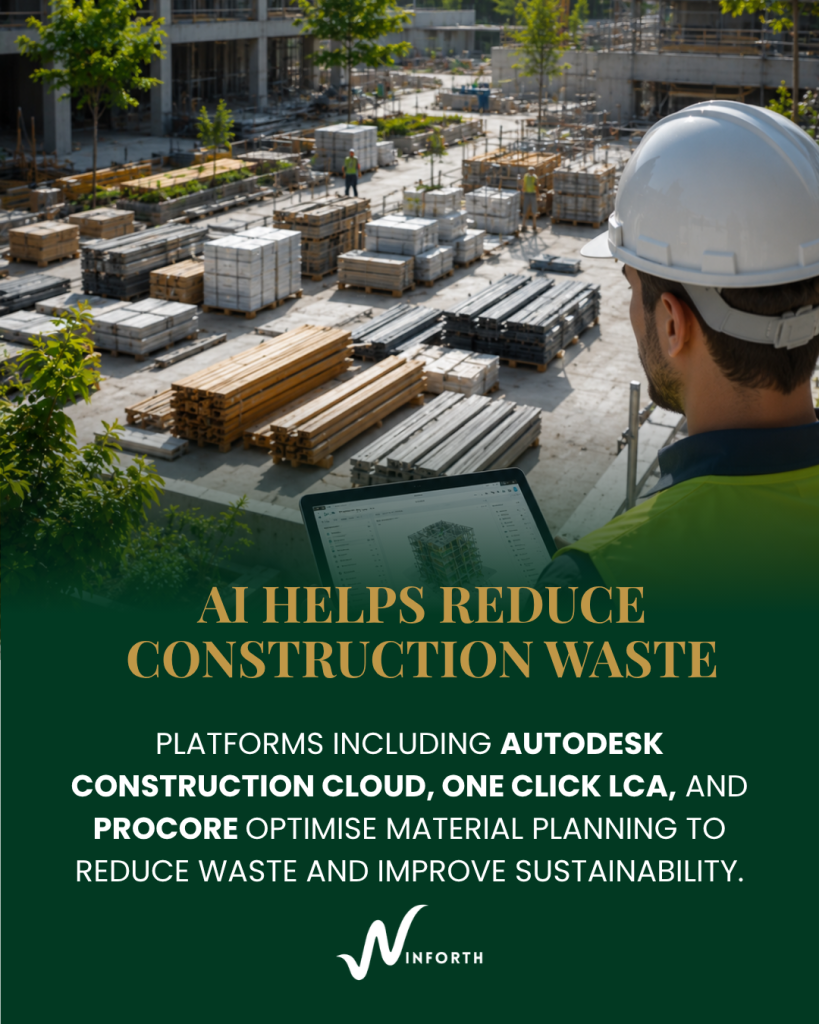
Construction generates significant amounts of waste every year.
Platforms such as Autodesk Construction Cloud, One Click LCA, and Procore help contractors calculate accurate material quantities, reduce over-ordering, monitor waste, and improve environmental performance throughout a project’s lifecycle.
This lowers costs while supporting more sustainable construction practices.
Why it matters
- Less waste
- Lower material costs
- Reduced carbon emissions
- Better sustainability
9. AI Supports Smarter Decision-Making
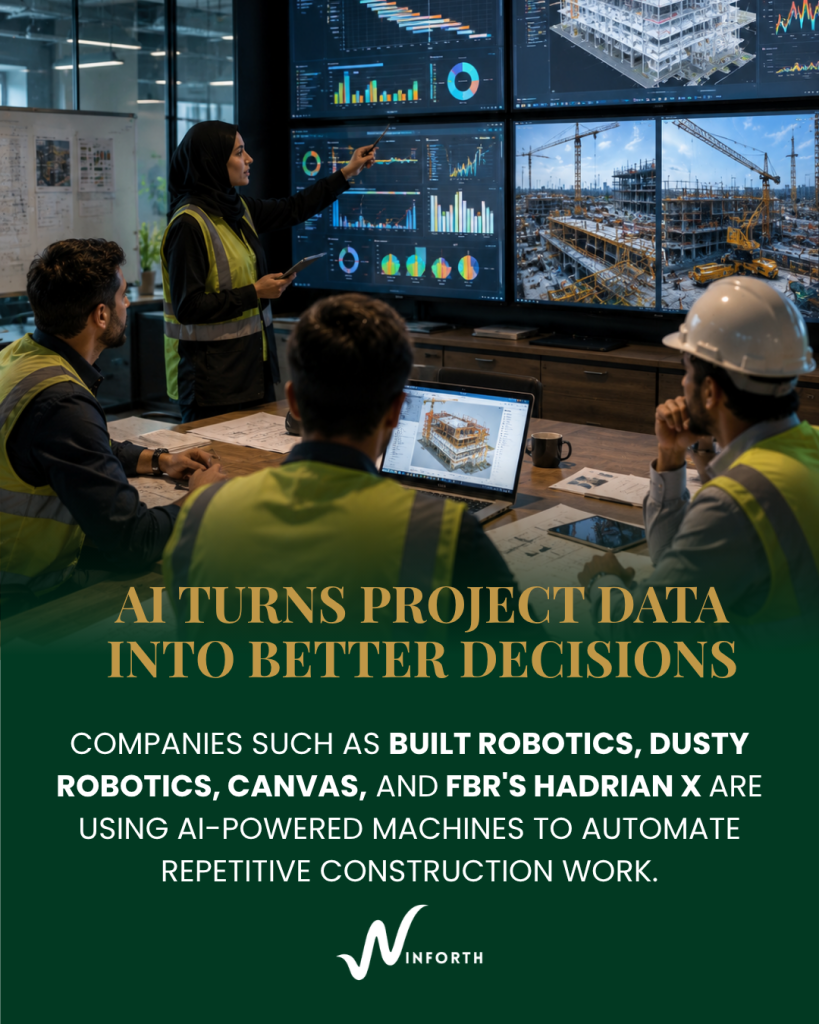
Automation is becoming increasingly common on construction sites.
Companies including Built Robotics, Dusty Robotics, Canvas, and FBR have developed AI-powered systems capable of autonomous excavation, robotic layout marking, drywall finishing, and high-speed bricklaying.
Rather than replacing skilled workers, these technologies improve productivity while allowing people to focus on more specialised tasks.
Why it matters
- Increased productivity
- Reduced labour shortages
- Better consistency
- Improved site efficiency
10. AI Creates Digital Twins of Buildings
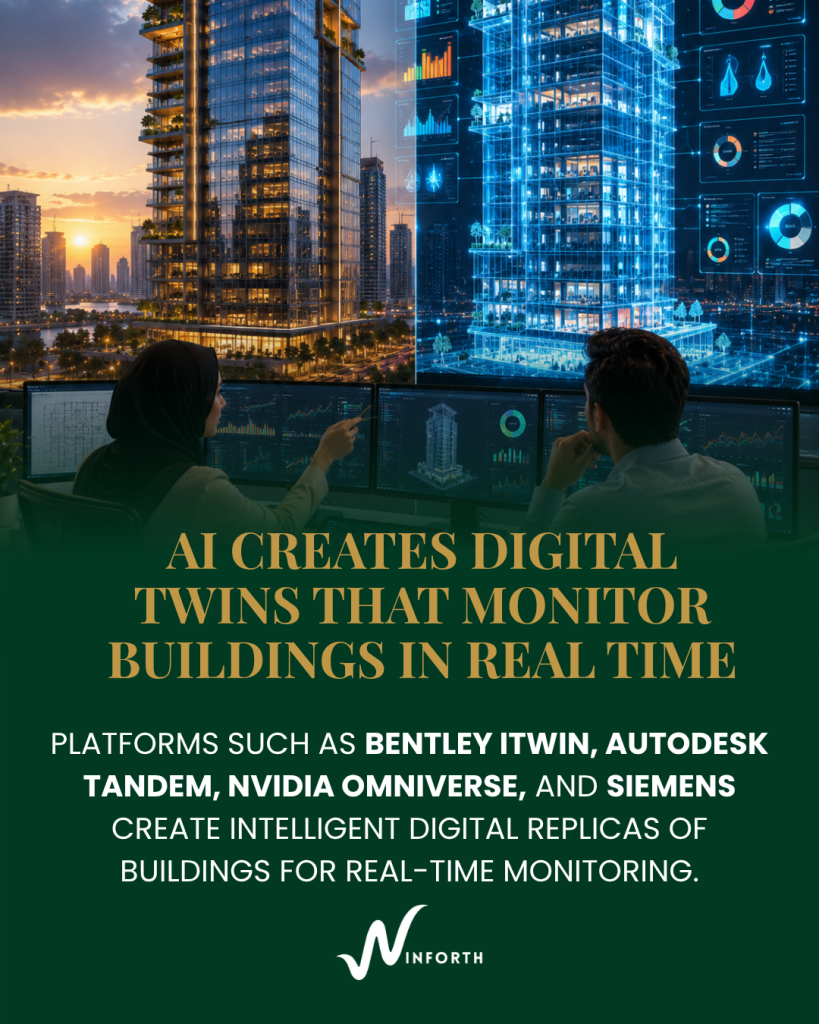
Digital twins are becoming one of construction’s most powerful management tools.
Platforms including Bentley iTwin, Autodesk Tandem, NVIDIA Omniverse, and Siemens create virtual models that continuously update using live sensor data from real buildings.
These digital replicas help teams monitor performance, predict maintenance needs, improve energy efficiency, and manage buildings long after construction is complete.
Why it matters
- Better building management
- Improved maintenance
- Real-time monitoring
- Lower operating costs
Our Perspective
Artificial intelligence isn’t changing construction by replacing people, it’s changing how people build.
The most successful projects will always depend on experienced architects, engineers, contractors, and project managers. AI simply gives them better data, faster insights, and smarter tools to make informed decisions at every stage of a project.
At Winforth, we believe innovation has value only when it delivers better outcomes. Whether it’s improving design, reducing delays, increasing safety, or helping projects run more efficiently, AI is becoming another tool that supports better construction, not a substitute for the expertise behind it.
As the industry continues to evolve, the companies that combine technology with experience will be the ones shaping the future of how we build.